Reviewing Black History Month for Business Merch
As an embroidery designer who has spent years digitizing files for small businesses, I look at every new machine embroidery design through a specific lens: does it work in the real world? It is not enough for a graphic to look good on a screen. It must hold up under the needle, survive the wash cycle, and communicate a clear message to the customer. Recently, I evaluated the Black History Month digital embroidery file to determine its viability for branded merchandise, staff uniforms, and boutique product lines. This review focuses on how this design functions as a tool for awareness and brand building.
First Impressions and Visual Personality
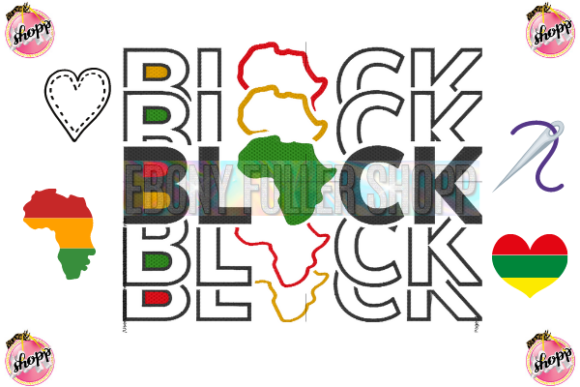
The Black History Month design presents itself as a meaningful embellishment for any fabric. From a designer’s perspective, the immediate impression is one of purposeful support. It does not try to be overly decorative or whimsical; instead, it leans into a tone that is professional, bold, and respectful. For small business owners, this visual personality is crucial. When you are creating items that raise awareness, the design must feel authentic rather than like an afterthought.
The description notes that it helps raise awareness and show support for topics that matter. In terms of aesthetic, this translates to a clean, readable layout that prioritizes clarity. Whether your brand identity is modern, classic, or handmade, this type of design serves as a strong anchor. It avoids excessive complexity, which is often a pitfall in awareness-themed graphics. For embroidery shops and apparel decorators, a design that balances message with stitch efficiency is always a welcome addition to the library.
Real-World Applications for Small Business Merch
The true test of any digital embroidery file is its versatility. I imagine several scenarios where this design could add significant value to a small business’s product lineup. Consider a local café or bakery looking to connect with their community during February. Embroidering this design on aprons or tote bags creates a subtle yet powerful statement. It transforms standard workwear into conversation starters, enhancing customer engagement without being intrusive.
For handmade brands and Etsy sellers, this design works exceptionally well as an embroidered patch. Patches are low-risk, high-reward items. They allow customers to buy into a cause without committing to a full garment. You can sew these patches onto denim jackets, canvas backpacks, or even include them as free gifts with purchase to boost perceived value. The design’s focus on awareness makes it ideal for event merch, such as community gatherings, educational workshops, or local market stalls.
Boutiques and creative studios can also utilize this for custom apparel. Think of crewneck sweatshirts or structured caps. When placed on the chest or sleeve, the design acts as a badge of solidarity. It signals to your clientele that your business values inclusivity and history. This alignment between brand values and product offering strengthens brand identity and fosters deeper trust with your audience.
Technical Considerations and Placement Strategy
While the concept is strong, execution is everything. As a designer, I advise caution when placing this design on challenging surfaces. If you are using it for cap embroidery, ensure the hoop size accommodates the curvature of the front panel. Detailed outlines can distort if the fabric pulls unevenly. Similarly, for tote bag design applications, consider the fabric texture. Canvas is sturdy, but if the weave is loose, you may need a cut-away stabilizer to prevent puckering.
Stitch density is another critical factor. Awareness designs often rely on text or symbolic shapes. If the stitch density is too high, the design can become stiff and heavy, especially on lighter fabrics like t-shirts or linen aprons. Conversely, if it is too light, it may not cover the fabric adequately, leading to visibility issues. I recommend testing the design on scrap fabric identical to your final product. Check how the thread colors contrast against dark uniforms or bright promotional items. High contrast ensures readability from a distance.
Small patch sizes require special attention. If you scale the design down for a lapel pin or small label, verify that the lettering remains legible. Tiny details can merge together under the needle. If the design includes fine lines, consider simplifying the stitch path or increasing the size slightly to maintain integrity. Always confirm the recommended hoop size before starting production to avoid re-hooping errors.
Enhancing Brand Identity and Customer Trust
Integrating Black History Month into your product line is more than a seasonal tactic; it is a reflection of your brand’s core values. Consistent use of high-quality design assets signals professionalism. When customers see a well-executed embroidered piece, they perceive the entire brand as premium and trustworthy. This is particularly important for small businesses competing in crowded markets like Etsy or local craft fairs.
A well-made finished product speaks volumes. It shows that you care about quality control and attention to detail. This level of care extends to how customers view your stance on social issues. A sloppy embroidery job can undermine the seriousness of the message. Therefore, investing time in proper stabilization and thread selection is non-negotiable. Use color-fast threads to ensure the design withstands frequent washing, maintaining its vibrancy and message over time.
Practical Designer Notes for Production
Before running a large batch of commercial embroidery projects, follow these practical steps to ensure success:
- Test in Black and White First: Print or stitch a monochrome version to check for clarity and contrast issues without the distraction of color.
- Check Scalability: Verify if the design holds up at smaller patch sizes. If details blur, it may not be suitable for tiny applications.
- Review Thread Color Contrast: Ensure your chosen thread colors stand out against the fabric background. Dark threads on dark fabrics need careful planning.
- Inspect Spacing: Look for areas where stitches might overlap excessively or leave gaps. Adjust tension if necessary.
- Confirm Hoop Size: Make sure your machine’s hoop can accommodate the design dimensions comfortably.
- Test on Real Fabric: Always run a sample on the actual material you plan to use, whether it is denim, cotton, or polyester.
- Use Proper Stabilizer: Match the stabilizer to the fabric weight. Heavy fabrics may need less support, while stretchy knits require robust stabilization.
- Create a Printable Mockup: Use a mockup to visualize the design on the final product for client approval or marketing materials.
- Compare Design Assets: Place this design beside your other branding elements to ensure visual consistency across your product line.
- Confirm Commercial Licensing: Before selling any items, verify the license terms included with the Black History Month Digital Embroidery Design - a great embellishment for any fabric. It helps raise awareness and show support for topics that matter This machine embroidery design comes with multipl formats. Ensure you have the right to sell finished goods.
Note that specific technical details such as exact stitch count, file format compatibility, or precise hoop dimensions are not explicitly listed in the provided description. Therefore, it is essential to check these details with the provider before beginning production. Knowing whether you receive PES, DST, or JEF files will determine your workflow efficiency.
Final Verdict for Merch Creators
The Black History Month embroidery design is a solid choice for businesses looking to create meaningful, awareness-driven merchandise. Its strength lies in its clarity and professional tone. By paying attention to technical details like stabilizer choice, thread contrast, and placement, you can produce high-quality items that resonate with customers. Whether used for staff uniforms, promotional tote bags, or retail patches, this design supports a narrative of inclusion and respect. For the conscientious crafter or apparel decorator, it offers a reliable way to align commercial activity with community values.